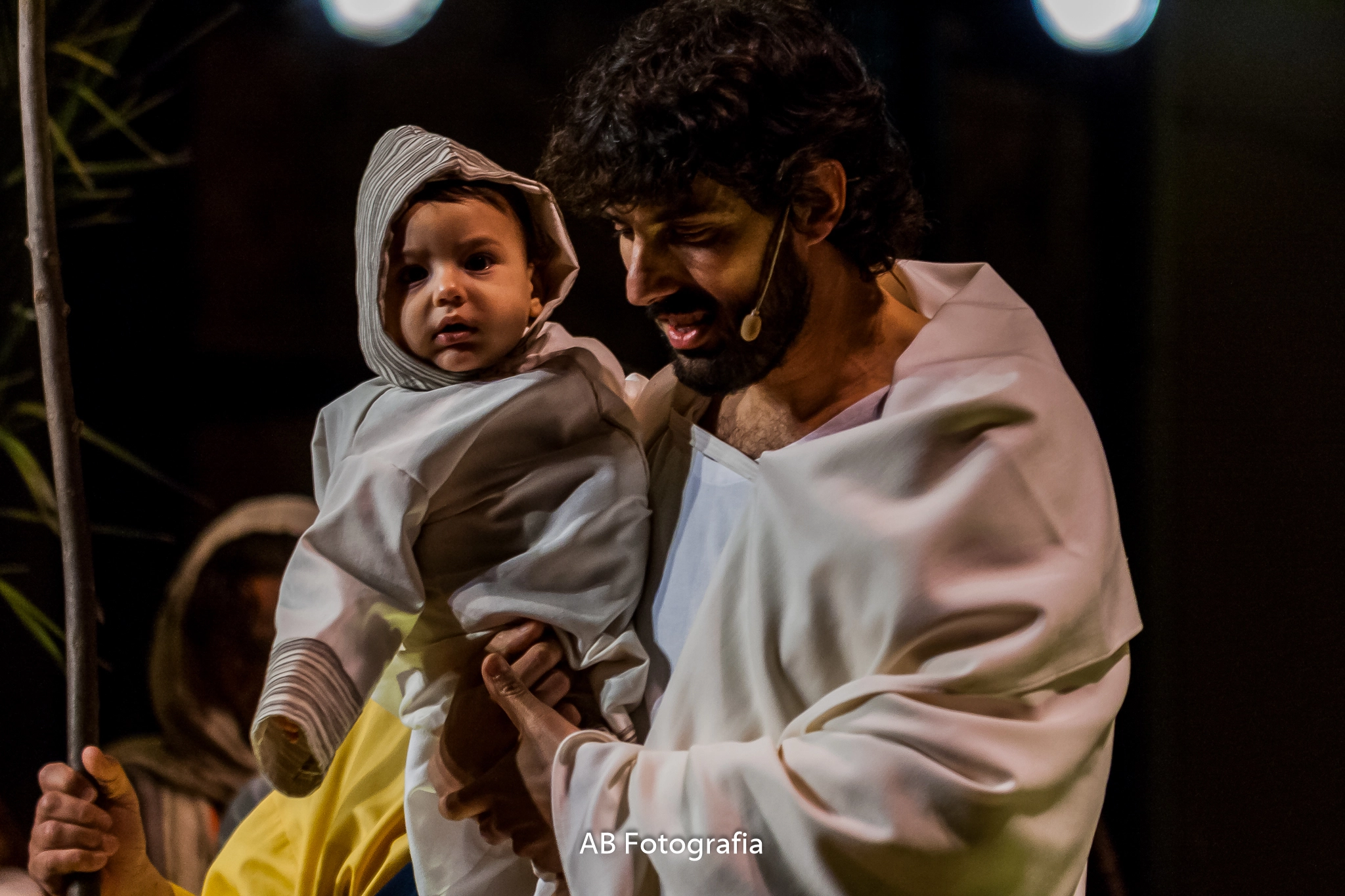
Jesus is the central figure in the Passion story at Verges, but the character’s history is also that of the actors who have played him. Speech, gesture, the street procession and coordination with other participants shape a role connecting the stage in the square with the Procession’s conclusion.
“Fer de Déu”: a local expression
In local speech, “fer de Déu”, playing God, can refer to the actor portraying Jesus. Josep Maria Llach i Grande uses this name when recalling the procession. This vocabulary helps explain how participants identify the role, without confusing the actor with the character outside the performance.
Learning a role within the village
Aureli Serra explains that he grew up very close to the stage. Children followed rehearsals and heard the verses repeatedly. This proximity made the text familiar before they assumed a major part.
In his account, Aureli places his first participation at around six and recalls joining the manages before playing Jesus Christ. He estimates that he began playing Jesus at seventeen or eighteen and continued for about seventeen years. These are remembered durations, rather than a verified sequence of annual casts.
His involvement later continued in the Sanhedrin. His account shows how one person could move between roles over a lifetime; uncertain parts and durations are not treated as established facts.
The performers recalled by Pere Fuster
Through his participation in the Scourging, Pere Fuster remembers several Christs: Martí Planellas, a performer he calls Josep Soler, and then Aureli Serra. This is the succession he recalls from his experience, not an exhaustive list of everyone who has played Jesus in Verges.
Pere also remembers Josep reciting verses in the streets. Reciting them does not prove he composed them. Learning and transmitting texts must be distinguished from literary authorship, as explained in the article on versions and authorship.
The text, the cross and the falls
In the 2011 script, Jesus addresses the cross at the end of Pilate’s Sentence and develops the image of the “sweet and beloved spouse” again at the Third Fall. The cross is both a theatrical element and a symbol of sacrifice and redemption.
The falls involve the Jueus, the manages and other characters. The role requires understanding between participants: the group’s presence, movements and speeches build the performance together. The Second Fall particularly illustrates this coordination.
The Crucifixion and the Pietà
The revival of the Crucifixion scene in 1980 marks a phase in modern performance history, rather than the first Crucifixion in the entire history of Verges. The corresponding article explains the documentation and Aureli’s memories.
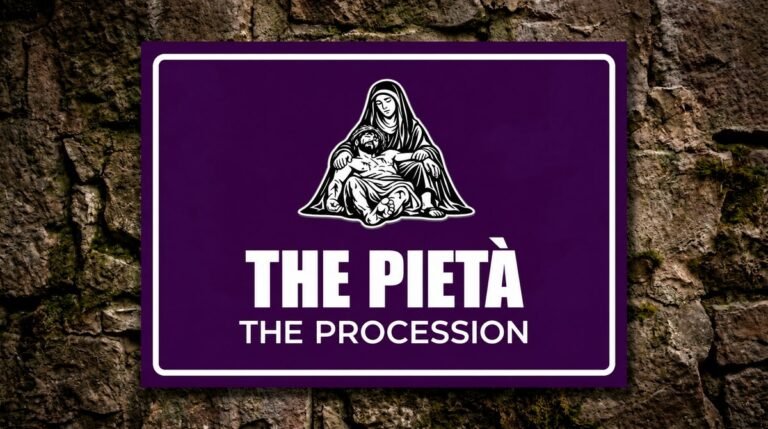
The 2011 script ends with the Descent and the Pietà: Mary receives Jesus in her lap. The Dance’s outdoor bow and its conclusion in the church must be explained using sources from each period, rather than combined into one unchanging sequence. Continue with the Crucifixion and the Pietà.
Sources
La Processó de Verges (2011), introductory study, p. 99 and pp. 129–141. Interviews with Aureli Serra, Pere Fuster and Josep Maria Llach i Grande in the Memòria Viva La Processó project, analysed as part of this research.