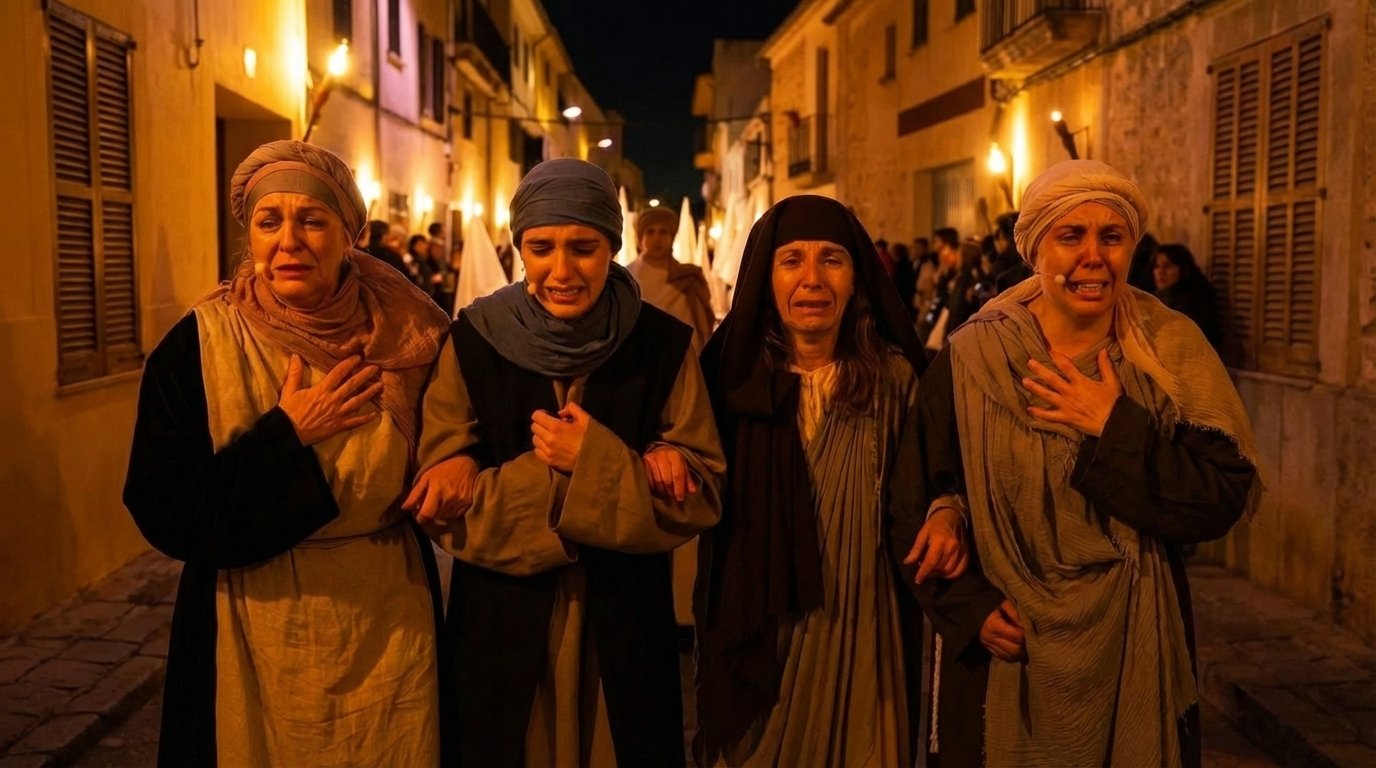
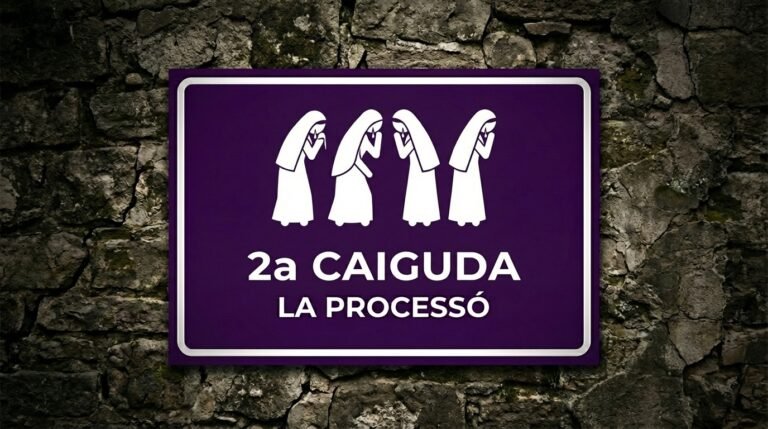
Within the drama of the Second Fall, the figures popularly known as the Weeping Women (who appear in the performance’s text as the Daughters of Jerusalem) represent collective mourning and compassion. Their appearance is one of the most emotionally contrasting moments of the night: while The Jews celebrate the fall, they introduce a note of sadness and piety.
The Dance of The Jews and the Lament of the Daughters of Jerusalem
The scene of the Second Fall is known for its harshness. When Jesus falls to the ground, The Jews do not stop; they join hands and begin a dance of jumps and jeers around the cross. At the same time, The Manages form a circle to the full sound of trumpets and drums.
It is amidst this noise and torment that the Weeping Women appear. At that moment, the sound of the drums fades, and their song begins, creating an atmosphere of reverence that moves everyone filling the streets.
The Dialogue of the Second Fall
The Daughters of Jerusalem address Jesus with a question that summarizes their anguish. They cannot understand how he who has done so much good is now treated like a criminal. Their role is not just to weep, but to witness Jesus’s physical weakness at a moment when his captors show no mercy.
It is precisely after their lament that The Jews decide to find Simon of Cyrene, fearing that Jesus cannot continue the journey on his own.
Symbolism and Street Tradition in the Verges Procession
The Weeping Women are one of the most iconic elements of Maundy Thursday. Dressed in mourning robes and with their slow, deliberate walk, they keep the tradition of choral singing alive throughout the route. Their presence at the Second Fall transforms suffering into a shared experience.
Listening to their lament in the silent streets remains one of the most poignant experiences of the Verges Procession.