The history of the Verges Procession has been marked by challenges. One of its most critical moments occurred during the Spanish Verges Procession Civil War period (1936-1939). It wasn’t a crisis of faith or enthusiasm—the people of Verges loved their tradition—but an inevitable consequence of the fear and instability of the time.
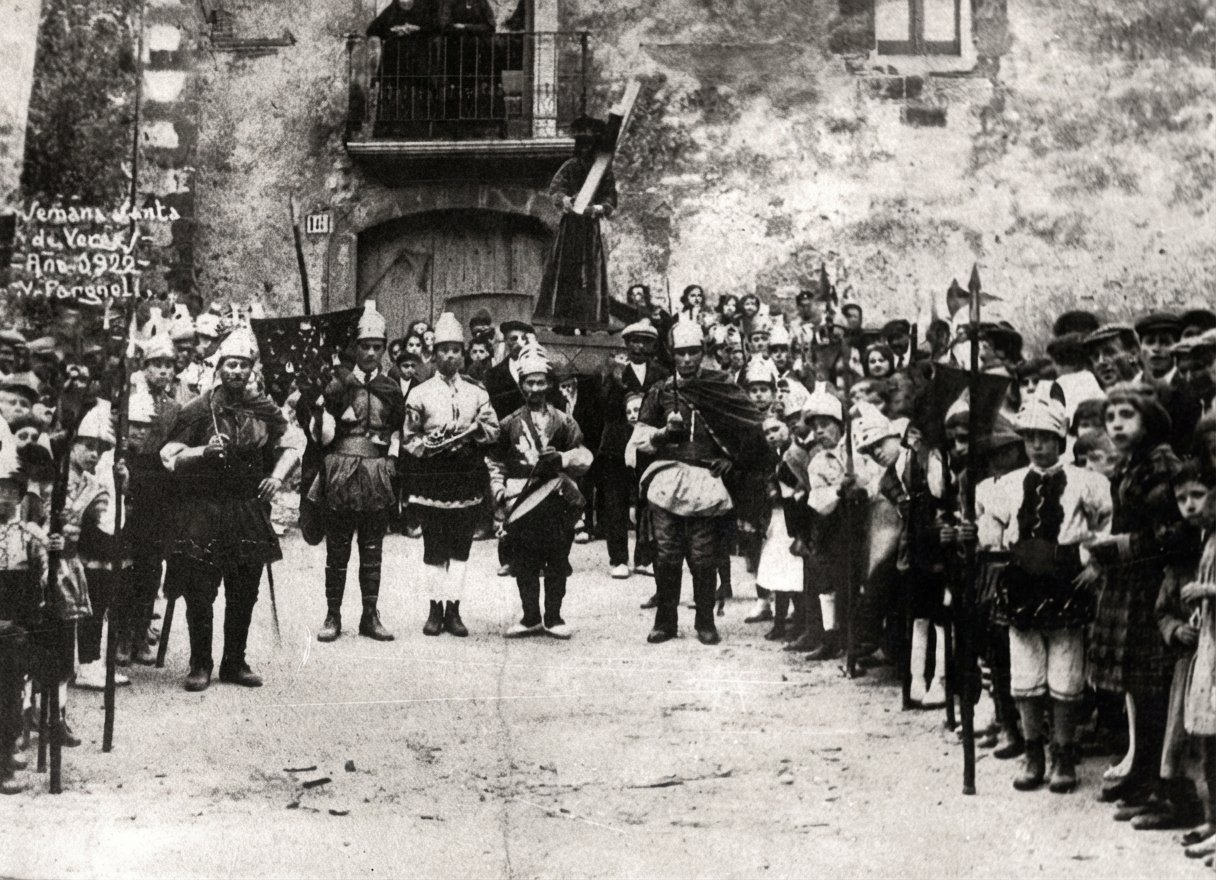
1936: The Forced Silence
The atmosphere leading up to the war was tense. In 1936, everything was ready for the procession, but a message from the civil governor changed everything: the authorities renounced all responsibility for security if any incidents occurred during the event.
Faced with this uncertainty and to prevent greater harm, the painful decision was made to suspend the procession. The streets of Verges fell silent that Maundy Thursday, and they would not see the Dance of Death again for four long years.
The Miracle of the Saved Materials
One of the most astonishing facts of this period is the survival of its heritage. While religious icons, costumes, and archives were destroyed or burned in many Catalan towns, in Verges, the material was saved.
The costumes for the Dance of Death, the soldiers’ weapons, and the stage elements all survived the war intact. This was crucial: had the materials been lost, reviving the festival would have been nearly impossible in an era of such severe economic hardship.
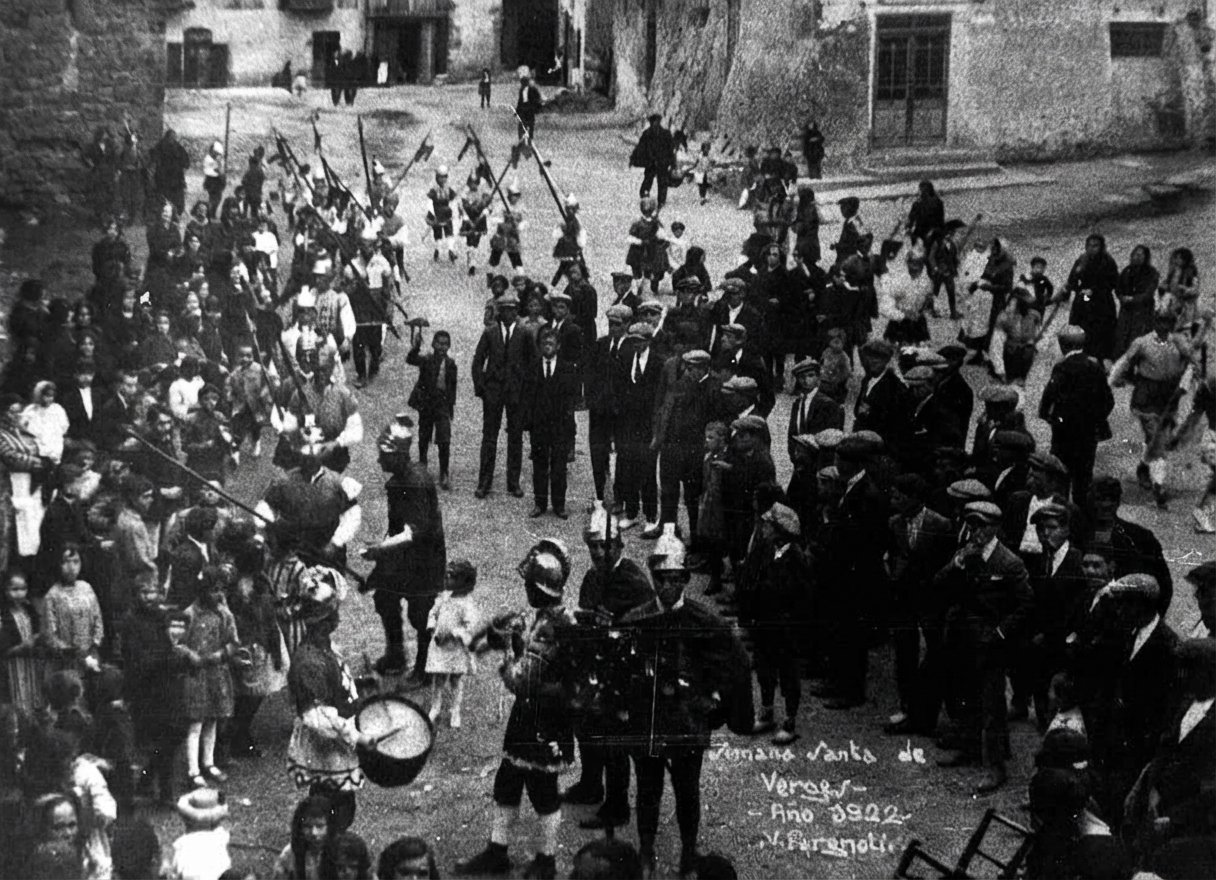
1940: A Procession Without Men
Once the war ended, the mayor at the time, Mr. Auquer, was adamant about reviving the tradition. People were eager to turn the page and return to normalcy, and everyone threw their support behind the project. In 1940, the procession returned to the streets.
However, those early post-war years were extremely difficult. There was a shortage of men. Between those who had died, those in exile, and the young men serving long military duties, Verges was left with a depleted workforce. Yet, the determination of the locals was stronger: the procession had to survive, whatever it took, with the hope that time would bring back those who were away.
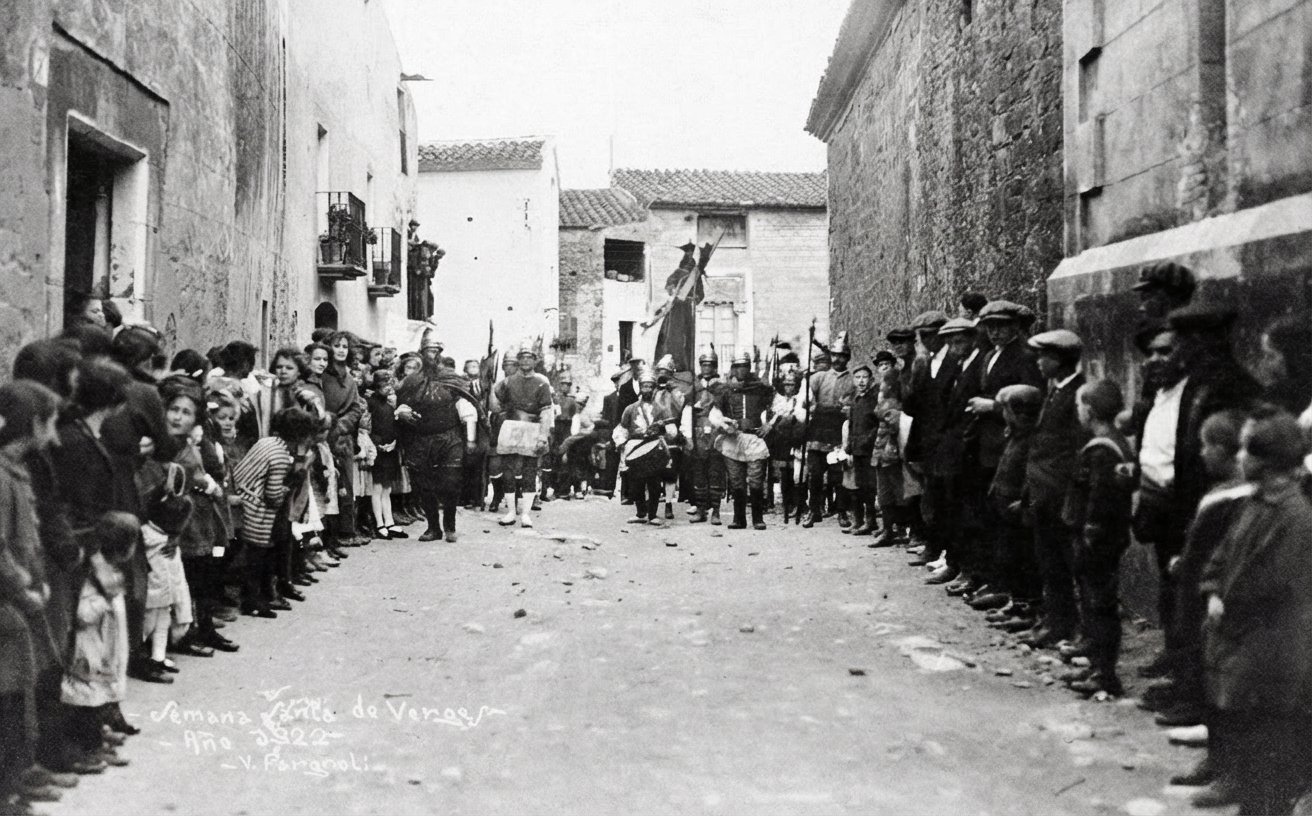
The Definitive Push: The Patronage
Until then, the Brotherhood of the Blood had managed the organization, but the new era required a new structure. It was then that The Patronage was created.
From that moment on, and thanks to the heroic effort of its director, Mr. Carles Perpinyà, the procession not only overcame its existential threats but also laid the groundwork for the quality and continuity we enjoy today.
Last updated: April 18, 2026