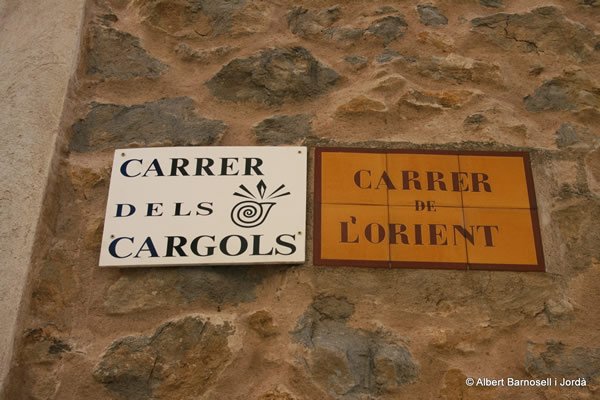
Snail Street is the popular name for carrer de l’Orient, one of the most distinctive places on the Verges Procession’s route. Small oil lamps made from snail shells and fixed to the walls transform the street’s light on Maundy Thursday night.
A tradition prepared by the neighbours
Serrà describes the family preparation she observed in 1996: some neighbours mixed ash and water, others attached the shells with their wicks and filled the lamps with oil. Sharing the work made decorating the street a collective task, well before the procession’s nighttime passage.
The book recalls an earlier communal snail meal and distinguishes it from family practices in the period observed. It also records adaptations to the paste and different oils. Materials and preparation had adapted to each household’s resources while preserving the small lamps’ form.
Lighting the procession
Their flickering light accompanies the procession and casts shadows on the stone. The visual effect depends on both the tiny lights and the neighbours’ preparation.
An origin to describe cautiously
The custom’s continuity does not establish its exact origin. Explanations involving an offering or shelter from the wind may help interpret it, but do not prove how it began. Serrà emphasises, above all, the persistence of the shell lamps in carrer de l’Orient.
Watching and preserving it
Preparing this space is part of the celebration and deserves respect: the shells on the walls are not souvenirs to take away. Plan your visit using each edition’s information rather than treating old filling or lighting times as the current programme.


Sources and context
Màriam Serrà, Verges i la processó que no es veu (1998), pp. 86–87; 103; account of the Procession observed in 1996.