While the First Fall in The Little Square sets the stage for Jesus’s ordeal, the Second Fall Verges Procession scene is where the hostility of The Jews erupts into a collective fury. In Plaça 11 de Setembre, the atmosphere fills with a unique tension, marking the point of no return before the final stretch of the route.
The “Sardana” of Humiliation
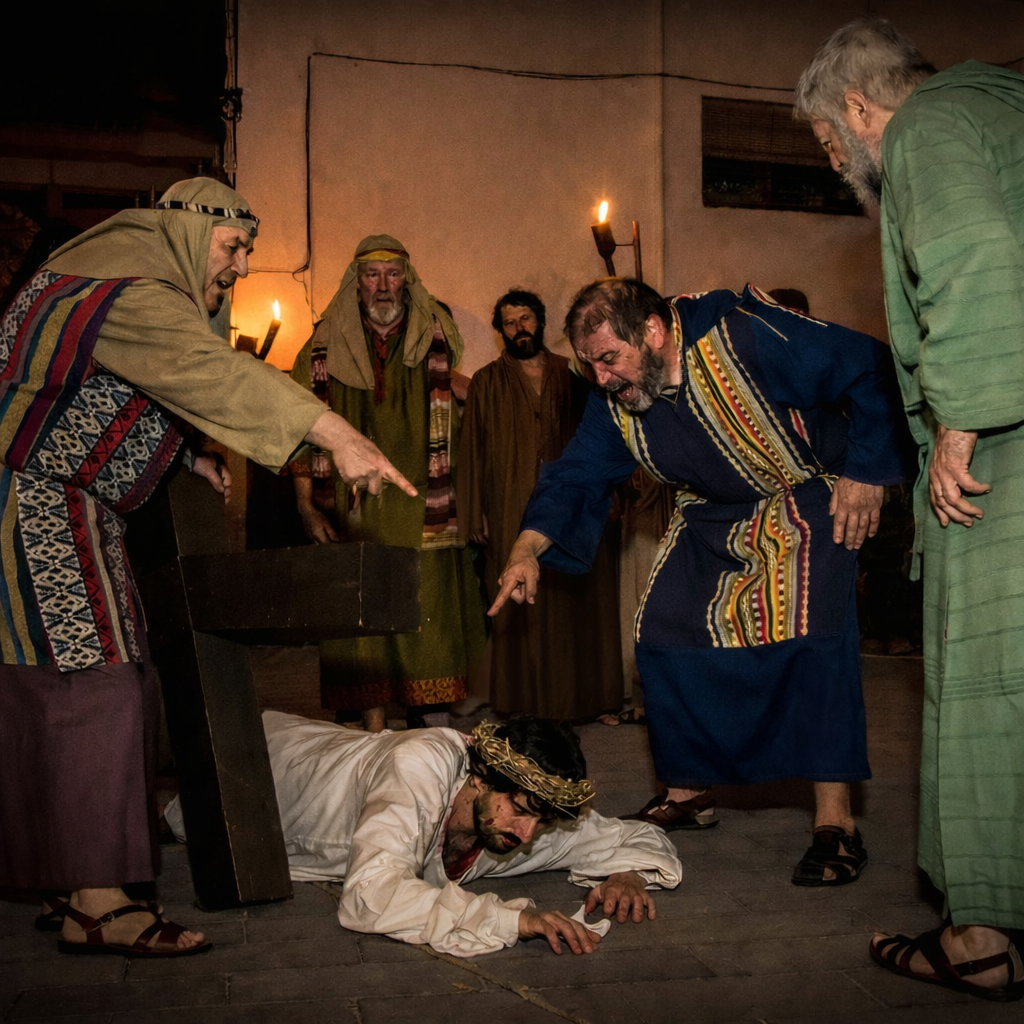
The most visually striking moment of this scene is the reaction of The Jews when Jesus falls to the ground for a second time. Far from showing any mercy, The Jews join hands and begin a **sardana of leaps and insults** around the cross.
This circle dance is one of the rawest moments of the night. As The Jews jump and jeer, the Manages form a second, outer circle. The constant, deafening sound of trumpets and drums creates a distressing atmosphere that isolates Jesus in his solitude as he is publicly mocked.
The Fury of The Jews: “I Banish Compassion”
The text recited in this square leaves no doubt about the harshness of the moment. One of The Jews openly proclaims his lack of humanity with verses that resonate strongly with the people of Verges and visitors alike:
“I banish compassion, and a great fury drives me; for the best medicine is these iron whips!”
This verbal aggression underscores the realism of the performance. The actor portraying Jesus must maintain his composure amidst a group of Jews who continually push and insult him, reminding us that the road to Calvary is a test of physical and mental endurance.
Simon of Cyrene: Help Out of Convenience
It is at this point in the procession that the figure of Simon of Cyrene appears. In Verges, however, his intervention is not born from a spontaneous act of charity. The Jews decide to find someone to help Jesus for a purely logistical reason: they fear he will not reach Calvary alive and will “die before his time.”
Simon, described as a sturdy and strong man, agrees to carry the cross in exchange for “good pay.” Despite the self-interest of The Jews, the character of Simon provides the only counterpoint of kindness by accepting the burden because, deep down, he feels “pity for this man.”
The Role of the Daughters of Jerusalem
Near where the fall takes place, the Daughters of Jerusalem await their turn. Their presence in the square is vital to balance the scene: against the fury of The Jews and the steady march of the Manages, they represent the tears and solace that accompany the condemned in his agony.