The figure of Jesus in the Verges Procession is not just the center of the religious narrative; it is the axis on which the entire technical and human complexity of the Maundy Thursday night revolves. Unlike other performances, the role of Jesus in Verges demands a physical rigor and preparation that transcends the stage.
The Actor’s Rigor: More Than a Performance
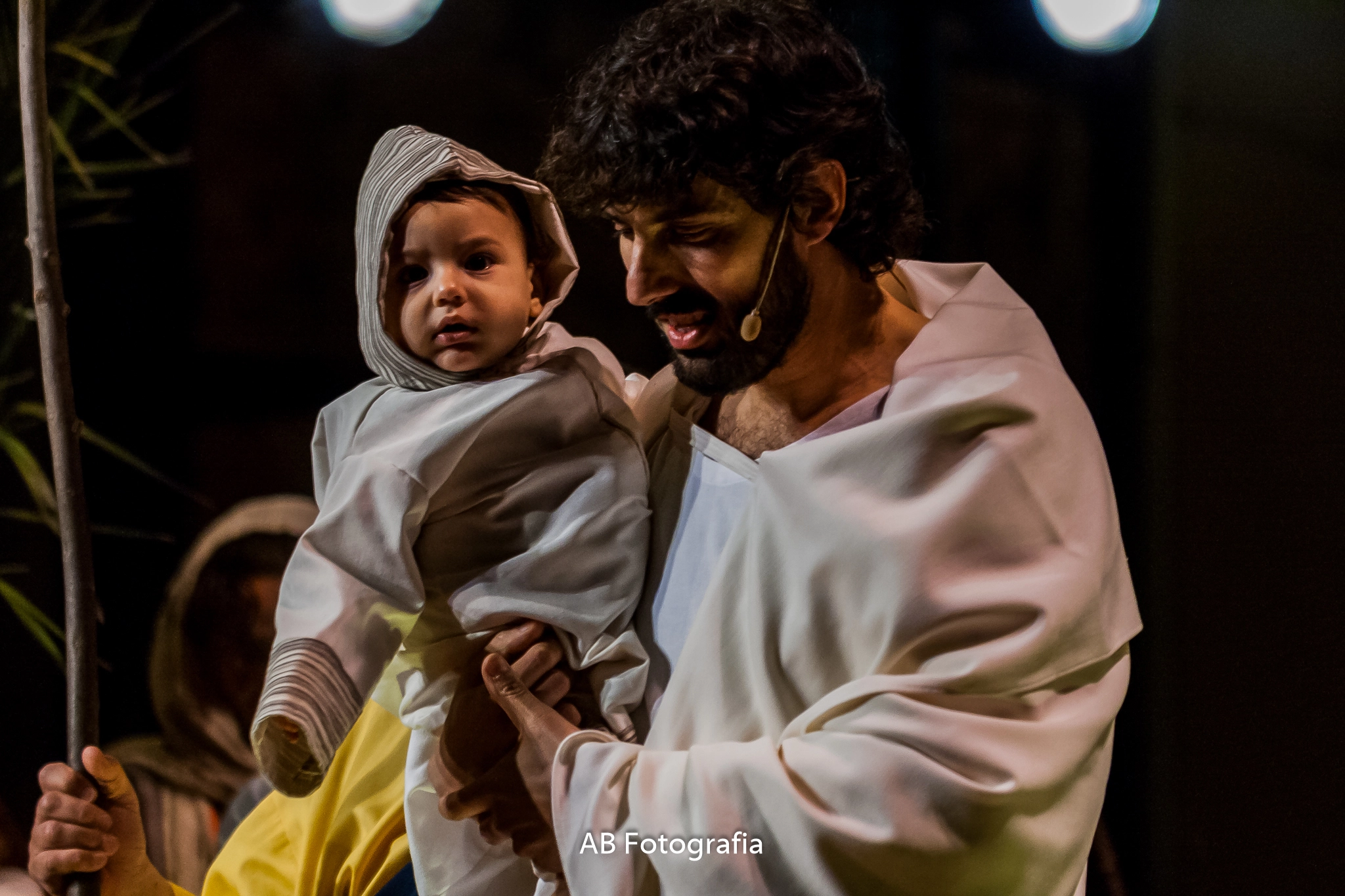
Whoever embodies Jesus in Verges takes on an enormous responsibility. It’s not just about reciting a script but submitting to real physical exhaustion. The official text warns us: the sentence of Pontius Pilate condemns the man to suffer “the harshest death for being infamous and seditious.”
The actor must carry a solid wooden cross for hours through the uneven streets of the old town. This realism is what generates the deathly silence when the character appears on stage; the audience doesn’t see an actor, they see the suffering of a man under the weight of tradition.
The Symbolism of the Cross: “Sweet and Beloved Spouse”
One of the most emotional moments that best defines the character’s psychology is the dialogue he has with the Cross. Jesus does not see the cross merely as an instrument of torture, but as a sacred element.
“For thirty-three years now, with eager longing, I have sought you, cross, to embrace you, sweet and beloved spouse.”
This duality between the physical weight (which forces him to fall three times) and the spiritual value (as a “precious and fortunate key”) is what gives the Verges Procession its unique identity.
The Way of the Cross: The Falls and the ‘Carrer dels Cargols’
Jesus’ path to Calvary is a journey of hostility. While the Manages set the pace, The Jews taunt him with chilling street verses: “we will rip all your flesh, we will flay all your skin!”.
In this context, the three falls are the points where realism reaches its peak:
- In The Little Square: Where the Blind Man, Pilgrim, recognizes his presence.
- In Plaça 11 de Setembre: Where The Jews perform a “sardana of leaps and insults” around an exhausted Jesus.
- On Carrer Migdia: The final trial before the Crucifixion.
The End of Jesus’ Journey: The Pietà at the Foot of the Cross
In Verges, Jesus’ journey culminates in the square with the Crucifixion. After the harshness of the nails and the suffering on the cross, the Descent from the Cross scene offers the most human and artistic image: the dead Jesus, placed in his mother’s lap, who covers him with her cloak.
While inside the church the Dance of Death performs its surrender, outside in the square, the figure of Jesus dead in Mary’s arms (the Pietà) closes the circle of the Passion, leaving an indelible mark on all attendees.
Last updated: April 25, 2026