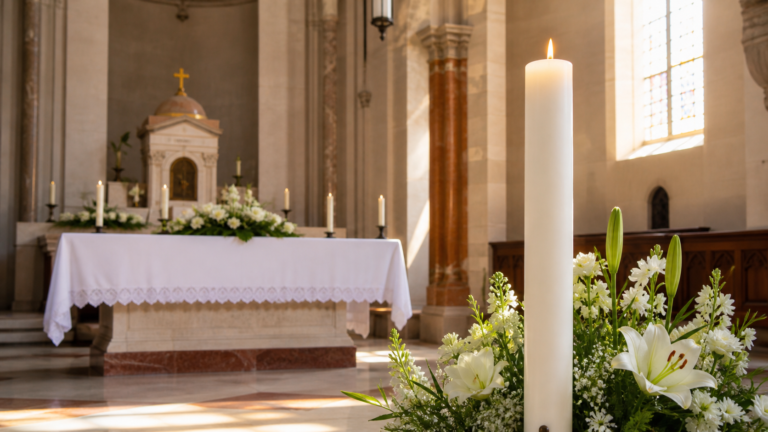
The meaning of Ash Wednesday goes beyond a simple date; it’s the official start of the countdown to Easter. Although often overshadowed by Carnival, this day marks “day zero” on the journey to Holy Week, a time when personal reflection and preparations for traditions like the renowned Verges Procession begin.
What Is Ash Wednesday and What Are Its Origins?
This day officially inaugurates Lent in the Roman rite. This period of forty days (not counting Sundays) is a journey of preparation leading up to Easter. The gesture of imposing ashes is an invitation to conversion and a reminder of the human condition.
Historically, the use of ashes stems from the penitential practices of the early Church. What began as a rite for public penitents eventually extended to the entire community during the 11th and 12th centuries.
Where Do the Ashes Come From?
One of the most curious and symbolic details is the origin of the material itself. According to the Roman Missal, the ashes are prepared by burning the olive or palm branches that were blessed on Palm Sunday of the previous year. This act creates a direct link between last year’s celebration and this year’s commitment.
The Liturgy and Symbolism of the Gesture
During the ceremony, the ashes act as a sacramental. It is not a sacrament itself, but rather a sacred sign that prepares the spirit for renewal. When the ashes are imposed, two biblical formulas are commonly used:
- “Repent, and believe in the Gospel.”
- “Remember that you are dust, and to dust you shall return.”
Rules of Fasting and Abstinence
Ash Wednesday is a day of obligatory penance for the Catholic community. The main rules are:
- Fasting: One full meal is eaten during the day (for individuals between 18 and 59).
- Abstinence: No meat is consumed (for those 14 and older).
This tradition aims to simplify daily life, focusing attention on what is essential and preparing for the powerful days of the Passion.
The Countdown to Holy Week in Verges
From this day, there are exactly 46 days until Easter Sunday. In towns with deep-rooted traditions like Verges, this period is crucial for the entire Holy Week. While the streets remain calm, preparations intensify behind the scenes: rehearsals for the Dance of Death, costume checks, and all the logistics for the Manages.